Years from now, when we're all peering at each other through Google Glass from the comfort of our self-driving cars, we may be able to rest assured that our homes are running as efficiently as the robots making our gadgets.
The word from two informants of The Information (pay wall) as well as a document the site reviewed is that Google is testing its own internet-connected thermostats, a homely device if there ever was one.
The climate controllers, part of a project reportedly called EnergySense, would help people keep tabs on their energy use and help them make adjustments accordingly. You know, like a thermostat would.
Mountain View may be making use of hardware from smart thermostat maker Ecobee, though the company's CEO said it wasn't working with Google.
What a gas:
One of The Information's sources said Google isn't looking to compete with Nest, that other major maker of smart thermostats, though it seems only natural competition would arise if Google decided to get into smart climate control racket.
Still, the Nexus 5-maker is said to have designs on making a more efficient energy grid, not ruling the isles of Home Depot. To that end, Google will reportedly launch a pilot program to generate energy-focused applications and services.
Non-Google employees have supposedly been tapped as "Trusted Testers" of Google smart thermostats in St. Louis, Mo., among other locations, though there's no indication when the EnergySense pilot will officially launch, if ever.
All eyes are on Google Glass right now, but the search engine giant's expensive and beta-only wearable isn't going to be the last of its kind. In fact, it's not even the first of its kind. Yes, there are several Google Glass competitors out there with strikingly similar head-mounted technology, all encouraging a more immersive digital lifestyle without the need to constantly look down at a phone's screen.
A few are less expensive than Glass and one has already launched, beating Google to the expected 2014 consumer product roll-out of its currently invite-only project. These smaller companies may not have the name recognition of Google or access to all of your data, but their head-mounted ideas deserve just as much face time.
1. Vuzix Smart Glasses M100:
Price: $999.99 (about £611/AU$1,116)Release Date: Available Now
Claiming to be the "world's first commercially available Smart Glasses," theVuzix Smart Glasses M100 had a staring contest with Google Glass and didn't blink in delivering on time.
Ready to be put on the jobThe currently available Google Glass rival ironically runs an Android-based operating system and is compatible with thousands of its apps, according to Vuzix. Furthermore, its monocular display over one eye and five megapixel camera with the ability to record HD video match what Google's Explorer Edition wearable is capable of right now. There are a bunch of 3-axis sensors on-board too: gyro, accelerometer and a compass, making it suitable for its target audience of "industrial, medical, retail and prosumer applications."
It's also significantly cheaper than the $1,500 (about £917/AU$1,675) Google Glass and new orders, in gray or white, are available to ship within two to four weeks. Before ordering, you should down the downsides, like the obvious fact that this small Rochester, New York company is going up against the Mountain View, Calif. internet titan. The M100 also it has an older USB mini B port, a smaller 4GB of flash storage (vs Glass' 16GB) and no fancy touch screen. We don't like that much either, especially in our futuristic tech.
2. Optinvent Ora-S AR:
Price: $949 or £699 (about AU$1,059)Release Date: March 2014The Optinvent Ora-S AR glasses are interesting because they promise full frames shades with "True AR," as the company likes to call it.
Like Red Bull, it'll give you wings!This is achieved by combining augmented reality with a dashboard mode in which images can be centered in a user's line of sight or in their peripheral vision for "info snacking." Sounds tasty.
Not as delicious sounding is the fact that the two settings are changed manually by adjusting the wing-like lever that juts out of the side of these Android-based glasses. The trade-off is that the bulky Ora-S features a larger 4:3 screen with a 24-degree field of view vs Google Glass' 14 degree FOV. The only spec shortfall is in the camera. Optinvent opted for a less revolutionary VGA snapper.
The developer version of the two-mode Optinvent Ora-S AR eyewear is expected to go on sale in March and be less expensive than what Google Glass Explorers are paying right now.
3. Recon Jet:
Price: $599 (about £368/AU$669)Release Date: Spring 2014
Recon Instruments makes its Recon Jet glasses sound promising because it's fashioning them as sports eyewear - it's not trying to sell the wearable as an awkward, new digital lifestyle.
Might even be able to beat a juiced Lance ArmstrongThe polarized lenses have an high-resolution display with IR Gaze detection facing your right eye and an HD camera pointing outward.
There's an optical touchpad next to the camera and inside there's a 1GHz dual-core CPU surrounded by antennas and sensors like GPS.
This results in a host of performance metrics: speed/pace, distance, duration and ascent/descent. Optional external antennas can add so that the dashboard gauges one's heart rate, power and cadence.
Best of all, these stats are joined by caller ID and SMS alerts in your periphery, negating the temptation to take your phone out of your biker short shorts every time it beeps or buzzes. All of this sounds promising for athletes, whether they're cycling or playing volleyball, especially when holding a cell phone isn't part of the game.
The Recon Jet shades can be ordered now in black or white for a bargain $599 (about £368/AU$669) with delivery expected in spring 2014.
4. GlassUp:
Price: Starting at $299 (about £184/AU$334)Release Date: June 2014
The crowd-funded GlassUp finished just shy of its funding goal, but that's okay because the startup went with Indiegogo instead of Kickstarter and still received most of the money it needed.
Are you down to wear GlassUp?The eyeglasses are designed for real-time information, alerting wearers of incoming emails, texts, tweets and Facebook updates.
Interestingly, they're read-only bifocals, with the startup being a little more realistic than some of its ahead-of-their-time competition.
"They are read only," admits GlassUp on its website. "We believe it would be messy to try and manage the messages: to respond to a message you'll have to go back to your mobile, as usual."
The prototypes aren't multimedia-centric either, giving basic text and icon information through its 320 × 240 resolution display.
Its maps app is illustrated using text and arrows for turn-by-turn directions, for example, and a TripAdvisor travel app features up to five review stars when standing in front of a hotel.
GlassUp is a little further off than its competitors with a release date set for June 2014. It's up for pre-order right now and can even be purchased in Bitcoin.
5. Epiphany Eyewear:
Price: Starting at $299 (about £184/AU$334)Release Date: 2014
Epiphany Eyewear describes its Google Glass alternative as "great designer glasses that happen to contain an incredibly powerful social computer."
Epiphany looks socially acceptable to wearThese normal-looking shades put style ahead of electronics, hiding an HD camera with a wide-angle field of view in the lenses. It's said to be wider than any smartphone camera out right now.
Epiphany is uniquely social, too. While there's no dramatic visual overlay on these spectacles, they're able to live stream video posts to Facebook through its own YouGen.TV video platform.
The Los Angeles-based company already has a number of beta testers uploading point-of-view videos, from boxing on Muscle Beach to shotgunning a beer at the office. There's no dramatic visual overlay in this version of the spectacles, but Epiphany's chic frames are compatible with prescription lenses and available for pre-order right now at an equally attractive price.
6. Telepathy One:
Price: UnknownRelease Date: UnknownThe Telepathy One is a trippy little headband that emphasizes its tagline "Wear Your Love."
Let others see your present while looking like the futureAs you might have guessed, this means the device is designed to broadcast what you see and hear to a close friend or family member who isn't physically close.
In addition to an integrated camera, the Telepathy One includes a micro-projection display on a frame that is worn the opposite way of Google Glass.
Glass runs from ear to to ear with its bridge resting on your nose. Telepathy One runs along the back of your head, opening up your field of view with only the micro-projection in the periphery.
There's no specific release date or pricing attached to this small startup's "intimate" take on wearables, but the team is actively tweaking the user interface to match what Google Glass has achieved in its Explorer program
Through the looking Glass:
The differences between the Google Glass tech specs and the internals of its competitors are subtle. All of them feature hands-free cameras and most have video overlays to augment reality. But the intentions of these Google Glass alternatives vary; some are meant for sports, others for lifestyle, and a few are destined to enhance social interactions. There's still time to consider alternate choices from what the search engine leader has to offer but sadly, only so much room on one's face for such a wearable.
The modern day Internet world faces its biggest challenge right now, and users are affected with it – the data security nightmare. Every now and then, successful hackers manage to break through the security measures of a renowned database, exposing along the way the online identities of hundreds of thousands of users of these services. While the targeted companies manage to recover from these attacks over the course of time, users aren’t always so lucky, where most of them are often left wondering whether their critical info was a part of the leak or not. This is where Australian software architect Troy Hunt’s new project comes in.
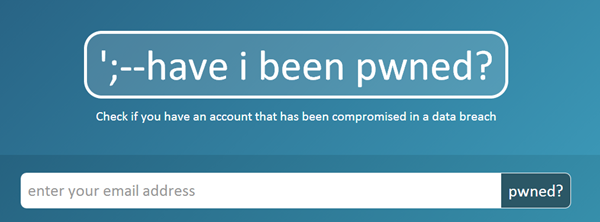
haveibeenpwned.com is a new Web service that allows you to check if your email address was a part of a security leak. As of now, Hunt’s website contains leaked user data from the breaches at Adobe Systems in 2013, the Yahoo! Leak in 2012, Sony’s infamous disaster from 2011, Start for from the same year, and the Gawker security breach in 2010. Hunt plans on adding more data to the list should they happen in the future (something we all wish wouldn’t happen).
To take advantage of the effort being haveibeenpwned.com, all you need to do is feed in your email address at the website, which will then run it against the data from the aforementioned security breaches and let you know if your supplied email address was a part of the list. There are other areas to explore as well, including an FAQs section as well as API support, but the primary functionality revolves around providing a central repository of leaked data and checking supplied email addresses against that. To that extent, the service works perfectly.
This is not the first website of its kind – security researches have come up with similar solutions after any such disaster in the past as well – but Hunt’s project aims at centralizing records to provide assurance against not one particular incident, but all of them, even in the future.
He does go on to discourage breaching a system just to contribute to the project, but something like this is bound to happen in the future as well. Hence, we find this portal useful now and again.
If we were to describe the last seven days in a word, that word would be "week" - but if we were to describe the last seven days' news in a word, that word would be "apps".
We've experienced an avalanche of apps, a profusion of programs, a shi– er, a lot of software, and no matter what platform you're on there's bound to be something new to excite and delight you.
First up there's Chrome, whose Keep and Sheets apps have been given an upgrade. Sheets is faster, handles bigger spreadsheets and works offline, while Keep still isn't as good as Evernote. Chrome Apps are coming to the Mac too, with a new section in the Chrome Web Store devoted to OS X-friendly programs. The apps appear in the Dock and turn up in Spotlight searches just like any other Mac software.
Spotify has a new app too: Spotify Shuffle, a subscription-free version for smartphones. The iOS and Android apps don't require subscriptions to listen any more either, and the service has signed an exclusive deal with Led Zeppelin, a band who were famous a very long time ago, to stream its back catalogue to the three people who haven't pirated it in the 14 years since Napster came along.
Streaming gets exclusive
The deal didn't impress Duncan Geere. Spotify is "forcing [consumers] to ask a question that hasn't been necessary to ask for a few years: 'Will it have my favourite band?'" That could be "a dangerous game to be playing… Spotify's early growth was in large part because it had almost everything." Fancy having to sign up with five different services to hear your five favourite artists? Us neither.
As Geere points out, such exclusivity is common in video streaming, where Netflix has taken the step of commissioning its own series such as House of Cards and Orange Is The New Black. That ties in neatly with our latest look at the two titans of video streaming, LoveFilm and Netflix. Which one deserves your cash? That very much depends on what you want to watch and what you want to watch it on. As our guide explains, the two services do very different things across different devices.
One of those devices is the Apple TV, where Netflix's app is getting some new neighbours: this week the US networks ABC and Bloomberg joined the Apple TV home screen, alongside movies app Crackle. There's still no iPlayer, though, and as Chris Smith points out: "The additions bring Apple more in line with other smart TV platforms, but do very little to help users completely cut the cord from their cable provider, which is reportedly part of the problem the company is experiencing in acquiring content for the rumoured Apple iTV set."
App attack
What's got 225 apps and is absolutely fantastic? No, not the new Nexus 5 - we mean our gigantic guide to the most kick-ass Android apps around. We've got more games than you can shake a joystick at, skins to make your smartphone sing, apps to keep the kids quiet and apps to make all kinds of noise.
There'll be plenty of noise in February too. That's when Mobile World Congress 2014, or MWC 2014 for short, kicks off. It's one of the most important shows in mobile and this time around we're expecting bendy brilliance, stupidly large screens and all-round awesomeness from the likes of LG, Nokia, Samsung, HTC and ZTE.
Don't expect to see the Samsung Galaxy S5 there, though: we reckon Samsung's going to give its next flagship its own event, possibly just before MWC kicks off.
Google's Chrome browser can be a nice way to enjoy your favourite books, and there are numerous apps out there offering extra features to enhance the experience. Our favourites: Kindle Cloud Reader, MeeGenius Children's Books, Google Play Books, English Audio Books - Librivox, and 100% Free eBooks & Audiobooks. Take one of these for a spin and you may not go back to paper or classic audiobooks again.
Books in a multimedia environment bring certain advantages not available on paper alone or via classic audiobooks. Among those advantages are audio accompaniment for text and cloud syncing of notes and highlights.
Add to that the lower distribution costs of multimedia over paper and the browser becomes a good tool for books. You don't need an e-reader or a tablet.
In this week's All Things Appy we take a look at the best free Chrome browser apps for books -- not only free apps but free books too.
About the Ecosystem: Google's Chrome apps and extensions for its browser are obtained in the Chrome Web Store. Open Chrome on a PC and select a new tab; then choose the new-look Chrome Web Store tile on the page and use the on-page Search box to find the app you'd like to use.
Installed apps are now available in the Chrome bookmarks bar.
No. 1: Kindle Cloud Reader
Kindle Cloud Reader has 4 1/2 stars out of a possible 5 from 1,497 reviewers in the Chrome Web Store. The app has 1,261,255 users.
Scroll through your Amazon Kindle book collection and read them from within the Chrome browser.
Cloud-like features include the ability to see and edit bookmarks, notes and highlights that you've made on other Kindle-enabled devices. Last pages read are synced, and your current book can be read offline, too.
No. 2: MeeGenius Children's Books
MeeGenius has 4 stars out of a possible 5 from 385 reviewers in the Chrome Web Store. The app has 107,971 users.
This app reads beautifully illustrated children's books. One in-store reviewer comments that this app saves a lot of work at bedtime. Maybe, but MeeGenius also highlights the words on-screen in sync with audio, and kids can read the books themselves too, without the audio playback. A pause button helps with recapping.
Free titles include fables "Jack and the Beanstalk" and "The Field Mouse and the Town Mouse," among others.
No. 3: Google Play Books
Google Play Books has 4 stars out of a possible 5 from 2,210 reviewers in the Chrome Web Store. The app has 1,869,956 users.
Four million books are available for browsing along with numerous preview pages. The app boasts that it has millions of books available instantly for free too, which it may well do, but they're embedded with the paid books and so difficult to find without a title.
You have some work to do, in other words, and the app has a runner-up position in our list as a result.
No. 4: English Audio Books - Librivox
English Audio Books - Librivox has 5 stars out of a possible 5 from one reviewer in the Chrome Web Store. The app has 1,104 users.
Public domain audio source LibriVox provides access to more than 3,000 audiobooks including novels, biographies and so on, all recorded by volunteers.
One of the advantages of audiobook via Web browser is that you can read along with the text if it's provided, and it is here. So, this app is highly suitable for learning English too.
No. 5: 100% Free eBooks & Audiobooks
Freebooksites.com's 100% Free eBooks & Audiobooks has 3 1/2 stars out of a possible 5 from 31 reviewers in the Chrome Web Store. The app has 21,765 users.
This app isn't really an app, it's more of a compendium of resources to find free and very cheap books, but we're including it because it is a good source.
There's a bit of work to do, because you need to scroll through endless links to get anywhere, but it does have a massive list of free book resources.




 Posts


