You’d be forgiven for mistaking the ioPhone for Apple’s iPhone 5c. This Android-based knock-off handset features the same plastic shell as Apple’s device and is available in the same five bright colors: yellow, red, green, blue and white. Made by Japanese manufacturer Iosys, ioPhone is almost an exact replica of Apple’s handset, down to the curvature, the physical buttons and other detail.
The handset will go on sale in Japan tomorrow and we have the weirdest promotional video ever for your viewing pleasure, right after the break…
Check out the video.
That’s a catchy upbeat tune!
The ioPhone runs Android 4.2 and packs in a rather pedestrian 254ppi 480-by-854 pixel resolution display and a two-megapixel camera. It’s powered by a dual-core Mediatek chip with 512MB of RAM and has 4GB of built-in flash storage, as reported by CNET.
Hey, what did you expect for 15,490 yen (around $150)?
By comparison, the iPhone 5c has a 640-by-1,136 pixel resolution Retina display, an eight-megapixel iSight camera, at least 16GB of onboard storage and runs Apple’s dual-core A6 chip with 1GB of RAM.
ioPhone dimensions: 61.8×9×127.5mm versus 59.2×8.97×124.4 for Apple’s device.
Android is already known for its less than rock solid security. In fact, thanks to its open nature and the ability to side-load apps from just about anywhere it’s safe to say that Android can be a veritable minefield when it comes to keeping your device safe and secure.
As it turns out though, while some people worry about inadvertently downloading an app that takes control of their smartphone, or racks up huge bills by making calls or sending SMS messages without their knowledge, some people are actually installing these apps by choice. In fact, according to one report some Android phone owners are installing apps the promise to pay them for sending out thousands of SMS messages using their unlimited plans.
Adaptive Mobile researcher Cahal McDaid told the BBC that there is a huge market that revolves around paying smartphone owners for permission to send SMS messages in the thousands, often internationally. There’s no mention on how much these apps are paying smartphone owners, but no matter how much it is we can’t help but think that following such a route wouldn’t be the best idea in the world.
While carriers do indeed offer plans to customers that include unlimited SMS messages, those plans will likely not include such activities as being paid to abuse that plan by sending messages en-masse in this way. It’s entirely possible that overage charges could be applied to any contract found to be doing such things, potentially leaving the bill payer with a large fee that they could no doubt do without!
As McDaid points out, the other issue at play here is that those involved in such practices have no idea what these messages contain, though they will obviously be responsible for them in the long run.
Aside from the potential issues with your operator, you are allowing people to send messages from your mobile number, without having any control or visibility of what those messages are.
So yeah, might be worth giving this particular money making scheme a miss folks. There are tons of better ways to earn. Let’s start by getting a college degree and start hunting for a real job, what do you say? I’m pretty sure most of you would agree with us.
If you were to ask a fellow techie their top 10 picks for best smartphones of the year, I can almost guarantee you that the Samsung Galaxy S4 would be on the list. Even though Samsung have an early yearly release cycle, their flagship often set a bar which manufacturers strive to meet in the following months. With this being said, after unboxing Moto G and playing around it, it struck me just how good it’s performance actually is for a sub-$200 smartphone.
Even though I doubt many people will be in the situation where they are deciding whether to purchase the Moto G, or the Samsung Galaxy S4, comparing the two provides a useful performance benchmark to illustrate just how impressive the Moto G actually is. Spoilers aside, you’ll want to watch the comparison video below.
One thing which particularly stands out with the Moto G, is it’s display. When producing a smartphone on a lower budget, the display is often an area in which manufacturers take shortcuts. As it’s the thing you interact with most on a smartphone, I’m extremely happy that Motorola have taken no such route. Rocking a 4.5 inch panel of resolution 1280 x 1720, the Moto G has an effective pixel density of 329 pixels per inch. As a comparison, the iPhone 5s retina display, sports a pixel density of 326 pixels per inch. Of course this panel isn’t anywhere near on par with the 1080p giants like the Samsung Galaxy S4 which costs around $649 for the unlocked version in the U.S., or the HTC One, but it’s impressive none-the-less to see a (close to) matching pixel density as the iPhone 5s, on a $179 smartphone.
On the Moto G, you’ll find Android 4.3 Jellybean, with an update to Android 4.4 KitKat promised in early 2014. Whilst the performance and functionality of the Moto G is already stellar for the price, it’s heartening to know that an early KitKat update will improve the performance even more over the bar set by it’s budget. If you’re looking for a solid smartphone, that most certainly isn’t going to burn a giant hole in your pocket, the Moto G is seeming like an excellent option. With the recent Moto X price drop popularity boom, it’s clear that the public have high demand for smartphones which still perform well, but don’t break the bank.
Specs:
Galaxy S4
Price: $649 (factory unlocked in U.S.) OS: Android 4.3 (Jelly Bean) Processor: 1.9 GHz Quad-Core Processor Display: 5inch Full HD Super AMOLED (1920 x 1080) display, 441 ppi Battery: 2600 mAh Rear Camera: 13 MP Front Camera: 2 MP Wireless: 802.11 b/g/n | Bluetooth 4.0 Dimensions and weight: 136.6 x 69.8 x 7.9 mm, 130g Networks: 2.5G (GSM/ GPRS/ EDGE): 850 / 900 / 1800 / 1900 MHz 3G (HSPA+ 42Mbps): 850 / 900 / 1900 / 2100 MHz 4G (LTE Cat 3 100/50Mbps)
Moto G
Price: $179 (factory unlocked in U.S.) OS: Android 4.3 (Jelly Bean) Processor: Qualcomm Snapdragon 400 processor with 1.2 GHz quad-core CPU Display: 4.5 inches diagonal (11.3 cm) 1280 x 720 HD, 329 ppi Battery: Built-in rechargeable lithium-ion, 2070 mAh Rear Camera: 5 MP Front Camera: 1.3 MP Wireless: 802.11 b/g/n | Bluetooth 4.0 Dimensions and weight: H 129.9mm, W 65.9mm, D 6.0-11.6 mm, W 143g Networks: Global GSM Model: GSM/GPRS/EDGE (850, 900, 1800, 1900 MHz) UMTS/HSPA+ up to 21 Mbps (850, 900, 1900, 2100 MHz) US GSM Model: GSM/GPRS/EDGE (850, 900, 1800, 1900 MHz) UMTS/HSPA+ up to 21 Mbps (850, 1700 (AWS), 1900 MHz) CDMA Model: CDMA/EVDO Rev A (850, 1900 MHz) Both GSM models require a micro SIM card.
So, while Moto G may not have all the raw power of Galaxy S4, it costs around one-forth of the price for the unlocked version, which is a steal given the build quality and performance of the device, as can also be seen in the video above. If you want the most powerful and feature rich Android phone on the market, and budget is not the concern, Galaxy S4 is the way to go. But if you want vanilla Android experience with the features and performance nearly as good as the S4 for 1/4th the price, the Moto G is a no brainer!
It’s a problem that we’ve all been sufferers of but that doesn’t make it any less irritating. You’re on your way out the door in a terrifyingly short time but your phone or tablet could do with a little more juice battery before that door slams shut. The problem is none of our devices charge as quickly as we’d like, and battery technology shows no sign of fixing that problem any time soon.
Of course, if you find yourself in desperate need of a little more power on a truncated timescale then there are a couple of things that you can do to try and eek a little more power out of even the shortest periods of charging. It might not fully charge that power hungry phablet you’re toting around, but it’ll give it handy bump at least.
First, a little back story.
Each smartphone we take on our travels with us – and tablets to a lesser extent – comes with a variety of sensors and radios. WiFi, cellular, 3G and LTE on top of that, GPS, NFC and all manner of other acronyms that we can’t remember off the top of our heads. There’s a lot going on inside that little package, and it all needs powering.
So, and by now this probably isn’t going to come as much of a surprise, turning all those radios off can have a dramatic affect on power usage. That also means that if you turn them all off at the same time as trying to cram more power into a device’s battery, it should charge faster. In fact, it could theoretically even charge as much as 50% faster than with them off.
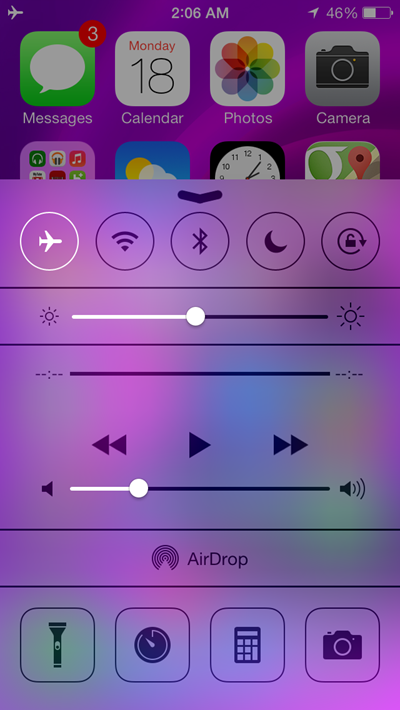
What this rather lengthy preamble leaves us with is an indisputable fact: turning Airplane Mode on can make your phone or tablet, be it an iPhone, iPad, Android or a Windows Phone smartphone, charge considerably faster than with it turned off, which is great news in a pinch.
And anything that makes us be tethered to a wall outlet for a shorter time is a win in our books.
Early adopters of the Nexus 5 look away now, LG and Google have tweaked the production process of the handset making it a slightly sturdier offering.
Some users had complained about the rattling sound made by the power/lock and volume keys on the new Nexus 5, and according to a post on the XDA Developers forum LG has returned to the drawing board to solidify those buttons.
It's not just the buttons which have been given some attention. There's also been a subtle change to the speaker grille on the base of the Nexus 5, with the machine drilled holes now ever so slightly larger than on earlier models.
All change please
There's no obvious advantage to be gained here for end users, perhaps the larger holes will allow for a slightly higher volume, but we don't expect much of a difference between old and new phones.
This isn't the first time LG and Google have altered the manufacturing process of a handset, with the Nexus 4 gaining two dimples on its rear a few months after launch, designed to lift the handset off a surface allowing for better volume from the rear speaker.
Of course this will all come as little comfort to those who did pick up a Nexus 5 early on, as there's no sign of a trade in program from Google or LG.
Apple gets more than its fair share of stick for supposedly not being innovative enough these days, but that wasn’t what everyone was saying when the iphone was first announced in 2007. Offering what, at the time, was the holy grail of mobile telecommunications in something the size of a smartphone, the iPhone was a truly revolutionary device.
Or was it?
Filmmaker Kirby Ferguson has been running an ‘Everything is a Remix’ series for a while and the artist has released a new case study based on the iPhone in which he looks into whether the device was truly a huge leap or simply a remix of devices and technologies that were either already available, or being worked on by other technology companies.
Ferguson points to the multi-touch technology that Apple claims to have created, pointing out that it was already being developed by more than one company independently of what Apple was working to create. While happy to give Apple credit for coming up with a device that was then copied en-masse by an industry desperately trying to play catch-up, Ferguson then turns his attention to the release of iOS 7 – a software update that was arguably heavily influenced by things like Windows Phone and the iPhone’s main competition, Android.
The gist of Ferguson’s argument is obviously that everything is eventually remixed and that nothing truly new is ever created, which not only sounds like a depressing notions to us, but also one that kind of misses the point somewhat. Still, the guy knows how to make a good video and if you’ve a spare ten minutes, some of his work is well worth the time to watch. Especially this iPhone-flavored one.
Apple famously announced the iPhone back in 2007 and the competition has spend the six years since doing its best to catch up with the Cupertino firm. With a smartphone market that has ballooned in the last six years, Apple could perhaps be given the credit for giving us the options that we have today.
There’s already little doubt that Microsoft will be changing things up with Windows Phone 8.1, the next update to the company’s somewhat undervalued and under-adopted mobile operating system. With the war against Apple and Google being lost, Microsoft knows it needs to make changes.
With BUILD 2014 already touted as being the first public outing of Windows Phone 8.1, rumors are about as to what Microsoft will change in its smartphone operating system. Talk of aNotification Center-like addition as well as Siri-like digital assistant using the voice of Halo’s Cortana has been the order of the day, and now renowned Twitter leaker @evleaks may have shown us an important step in the Windows Phone evolution.
The leaked image appears to be a cropped screenshot of on-screen buttons that would replace the hardware ones that currently adorn every Windows Phone device. The well known Back, Start and Search buttons that sit below the screen of all Windows Phone smartphones currently on sale are shown in the screenshot, suggesting that Microsoft is about to move those hardware buttons into software. It’s a move that Google has been working with hardware makers to implement for a couple of years now with Android, and it seems that Microsoft will be joining in next year.
While it may initially seem rather inconsequential, this move could actually prove to be a master stroke. With Microsoft already struggling to get device makers to concentrate on Windows Phone handsets in a world where all the action is on Android, removing hardware buttons may make it easier for hardware partners to design one handset and then ship it with either Windows Phone or Android installed, reducing the development required as well as manufacturing costs.
Whether such a move would be enough to get Windows Phone further up the totem pole at the big hardware companies remains to be seen, but it certainly can’t hurt. We’ll find out at 2014′s BUILD conference by the looks of things, so until then we’ll just have to take @evleaks’ word for it.
If there’s one thing we love about Andriod, it’s that ability to customize just about everything that those using the platform are always telling is the reason it is so popular. There’s something to be said for Apple’s walled garden and the amount of control it likes to have over everything, but sometimes it’s just nice to be able to fiddle around with your smartphone, isn’t it?
Cover, currently available for download but still in beta, is a prime example of something that would never be entertained on ios but is the epitomy of why people love Android so much. In fact, we’d go so far as to say we’d love to see this kind of thing come to both iOS and Windows Phone too, though we won’t be holding our breaths for that.
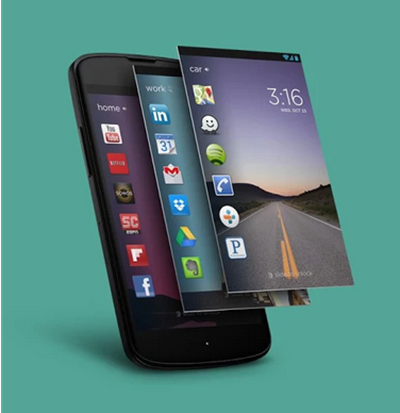
At its most simple level, Cover is a lock screen replacement for Android smartphones. Calling it that does its developer a disservice though, because it’s much more than that.
While having the right apps available on the lock screen is something that other third-party solutions have been trying to do for a while, Cover’s approach of doing that based on your location and context is something that can prove truly useful and that’s why we’re such big fans of it.
The idea is a simple one on the surface – Cover lets your phone alter its state based on where you are. If you’re at work the chances are you’re going to want a different lock screen to when you’re sat at home watching the big game. You’ll need different information and different apps at your finger tips. and that’s why Cover will do its best to adapt to those situations.
It’s not just about changing some icons either. Cover will let users ‘peak’ into apps from the lock screen, meaning that seeing the latest Twitter updates is only a swipe away. The idea is a great one, and the app’s promotional video certainly does enough to whet the appetite.
We’ll be keeping a beady eye on Cover as it matures, and we suggest you do too.
A short while ago, we checked out the incredibly cool – not a term I use lightly – smartphone-controlled paper airplane by the name of PowerUp 3.0. The concept was simple: make yourself a paper airplane, connect it to the precision-crafted hardware, and, using the app, fly it around for half an hour. With that product having raised over $600,000 (of a $50,000 goal) with many weeks still to go, another product has emerged to try to pique the interest of flight enthusiasts, and it’s arguably even more exciting than the PowerUp 3.0.7
The SmartPlane has a few similarities to the PowerUp in that it’s a Bluetooth connected, iPhone controlled RC plane, but this is where the comparisons end. The PowerUp, as per its name, offers a versatile, nippy design that brings bursts of speed and sharp changes in direction. This is all fun and all, but once you’ve had enough of buzzing around the park like a mosquito, the SmartPlane delivers a more accomplished, professional flight experience.
The SmartPlane is definitely built to be more of a glider than a racer, and although you can go full throttle (and drain the touted half an hour of battery life in just five minutes), burning out the device would go against all of the design considerations made in its creation.
If the PowerUp were the boy racer, the SmartPlane is the slightly more mature adult, but this by no means insinuates an experience short of pulsating, all-action fun. The company behind it have spent a good two years in optimizing the aerodynamics, and as a result, the plane flies slowly and assuredly. The throttle does let you speed things up now and again, but if you want to maximize the experience and not have to keep charging, then it should be utilized very sparingly.
As enjoyable as the PowerUp on Kickstarter may look, this plane, which is also said to be crash-proof thanks its lightweight but substantial frame, seems like it could also be a joy to behold. The accompanying app appears refined, and with Christmas just around the corner, I think I already know which one I’ll be putting atop my list to Santa.
The iOS vs. Android supremacy debate is almost as old as both the platforms’ own age, and it never ceases to be. In some areas, Android takes the top spot, while others see Apple’s offering outshine its Mountain View competitor. One area, however, where iOS has always maintained the upper hand, is fragmentation – the word that causes Android fans to hide faces and come up with other allegations against the fruity OS.
In easiest terms, fragmentation can be explained as the differences in hardware and software that Android is split in, whereby a huge variety of Android devices on the market is running outdated software, or are not even close to the latest version available from Google. How it impacts users is by creating a dilemma for app developers, since certain versions of Android are unable to run a particular app, hence rendering it useless for those that are running such software. The hardware limitations and differences only add to the problem, reducing the app’s user base even further.
A new graphic coming from Fortune illustrates the problem even more clearly, showing the percentage of users for different versions of Android out of total user population. As you can see, there is no version of Android that has a small user base, all the way from Éclair to Jelly Bean (KitKat isn’t included in the comparison).
From the graphic, it’s the trend that emerges which speaks volumes of trouble for Android. Even today, the largest percent of Android users are running Gingerbread (v 2.3), followed by not Jelly Bean or even Ice Cream Sandwich, but rather, Froyo (an even more outdated version). Jelly Bean follows in third place, and KitKat has the smallest user base until November. The trend also indicates that the user base for outdated versions is still continuing to grow.
In comparison, a similar chart for Apple has very clear distinctions, where iOS 6 users are just 22%, while a whopping majority of 74% are running iOS 7 on their devices, making up for 96% of Apple’s total mobile and tablet user base. What this means is faster updates, better quality apps, and uniformity for developers in knowing that whatever they develop will reach the maxima of user population.
Apple has openly criticized its primary competitor for fragmentation, and for good reason. The Cupertino company has only seven devices officially being sold in the market, making it much easier to maintain update integrity, unlike hundreds of variants of Android available. With KitKat’s ability to run on lower end devices, Google might be looking at changing that, but we don’t see that happening any time soon. Time will tell if they manage to beat it or not.





 Posts
Posts


